Leave Your Message

What Are the Best Brass Fittings for Faucets in China?

Choosing brass fittings for faucets in China requires more than comparing unit prices. The right connection must handle water pressure, repeated tightening, temperature changes, and daily contact with moisture. Brass Fittings For Faucet products vary by alloy, thread accuracy, plating, and internal finish. A fitting may look bright under showroom lights. That does not prove long service life. Real selection begins with the application.

For drinking-water faucets, buyers should request material declarations, lead-content test reports, and traceable batch information. Depending on market requirements, suppliers may offer low-lead brass or dezincification-resistant grades. Common options include CW617N, H59, and H62, but grade names alone are not enough. Confirm the actual composition through an independent laboratory when risk is high. Check thread gauges, pressure testing, leakage results, and plating adhesion. Small details matter. A poorly cut thread can damage a valve body or create a slow drip after installation.

This guide compares Chinese brass fitting suppliers through practical criteria, including machining consistency, corrosion resistance, dimensional control, documentation, and after-sales support. Factory audits should include casting areas, CNC lines, polishing stations, and final inspection records. Samples should be tested, not admired. Some recommendations may change after testing, because a cheaper fitting reduces total cost only when failures remain rare. That assumption deserves challenge. The best choice balances verified performance, compliant materials, reliable delivery, and the faucet’s actual design. No single alloy suits every installation.
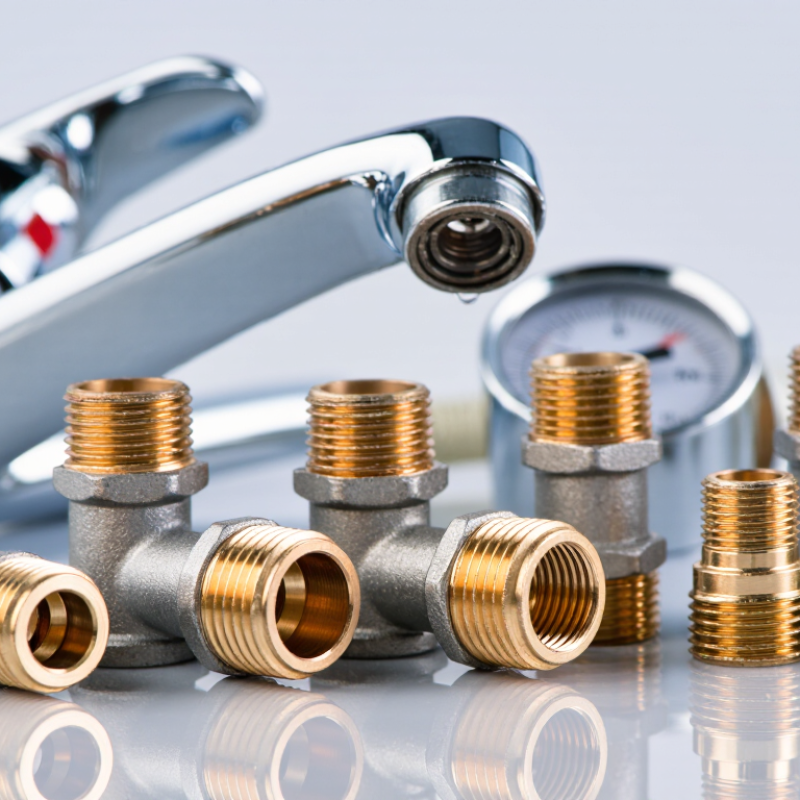
What Are the Best Brass Fittings for Faucets in China?

Types of Brass Fittings Used for Faucets in China

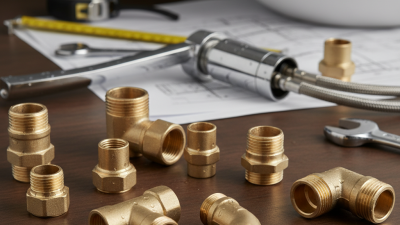
In China, faucet fittings usually include straight connectors, angle valves, adapters, couplings, and threaded extensions. Each type serves a different installation need. Straight connectors join supply lines under sinks. Angle valves control water flow in tight corners. Adapters connect different thread sizes or materials. Couplings repair or extend a pipe run. Threaded fittings remain popular because plumbers can install and replace them easily.

Forged brass fittings generally offer better strength than lightweight cast parts. Machined threads should feel clean, even, and firm without sharp edges. Many suppliers use nickel or chrome plating for corrosion resistance and a brighter finish. However, appearance alone proves little. Ask for the brass grade, wall thickness, pressure test results, and applicable product standards. Lead-reduced or lead-free brass may suit drinking-water applications, depending on local requirements. For coastal projects, dezincification-resistant brass deserves attention. It can help reduce premature leakage.

Tips: Match the fitting thread with the faucet and hose before ordering. Confirm whether the thread is metric, BSP, or another specification. Check the sealing method, such as a washer, O-ring, or thread sealant. Inspect several samples, not only one. I still recheck thread depth during production because a small error can cause installation trouble. Also, do not over-tighten brass fittings. Excessive force may damage threads or split a thin connector. A practical supplier should provide samples, inspection records, and clear traceability for each batch.
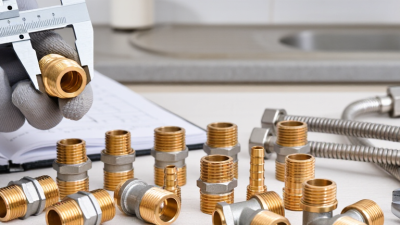
Key Materials and Standards for Chinese Brass Faucet Fittings

For Chinese brass faucet fittings, material selection should begin with water contact, not appearance. Common alloys such as HPb59-1 machine easily, but their lead content may create compliance concerns. Low-lead brass, dezincification-resistant brass, and lead-free silicon brass offer safer options. The correct choice depends on the destination market.

U.S. EPA rules define lead-free plumbing products as having a weighted average of no more than 0.25% lead on wetted surfaces. NSF/ANSI/CAN 61 also evaluates substances that may leach into drinking water. In Europe, Directive 2020/2184 sets a future lead limit of 5 micrograms per litre. These figures matter more than a shiny chrome finish. A polished surface is not proof.

Chinese suppliers should request alloy certificates, melt records, and third-party leaching results. GB/T 17219 provides a useful reference for drinking-water-contact materials in China. Threads, valve seats, and internal channels need inspection, too. I have seen fittings pass visual checks but fail after prolonged water exposure. That weakness is easy to miss.

Seal materials also require testing for temperature, pressure, and chemical compatibility. One practical concern remains: “lead-free” claims may use different definitions across markets. Buyers should confirm the exact alloy, test method, and certificate scope before approval.

Sources: U.S. EPA, Reduction of Lead in Drinking Water Act; NSF/ANSI/CAN 61; European Union Drinking Water Directive 2020/2184.

How to Choose Fittings for Different Faucet Applications

What Are the Best Brass Fittings for Faucets in China?

Choosing brass fittings for faucets starts with the application, not the catalog photo. A kitchen faucet may need a compact angle valve, flexible connector, and corrosion-resistant body. Bathroom faucets often use smaller adapters and tighter cabinet spaces. Commercial wash stations demand stronger threads, stable pressure handling, and easy maintenance. Match the fitting to water temperature, pressure, pipe material, and available clearance. Small details matter.

Check thread standards carefully, such as BSP or NPT, because similar-looking threads may not seal correctly. Measure the faucet tailpiece and supply pipe with a caliper when possible. For drinking-water systems, select brass with verified low-lead compliance and suitable sealing materials. In coastal or chemically treated water, dezincification-resistant brass can reduce premature failure. Compression fittings suit some service connections, while threaded adapters work better where replacement is expected. Do not force a mismatched part.

Installation quality still decides performance. Clean the threads, use the correct gasket, and tighten gradually. Excessive torque can crack a valve or distort a seal. Perform a pressure test before closing the cabinet, then inspect for slow drops after several minutes. A fitting that looks solid may still leak overnight. Even experienced buyers can overlook clearance or seal compatibility. That mistake deserves a second check, especially in busy commercial projects.

What Are the Best Brass Fittings for Faucets in China? — How to Choose Fittings for Different Faucet Applications
Faucet Application Recommended Fitting Type Suitable Brass Material Typical Connection Key Performance Requirements Main Advantages Important Selection Notes
Residential basin faucets Brass angle valve, straight connector, or faucet tailpiece Low-lead or lead-free brass; dezincification-resistant brass is preferred for aggressive water Compression, G-thread, or NPT thread depending on the plumbing system Reliable sealing, corrosion resistance, compact dimensions, and compatibility with potable water Easy to install and widely available in multiple connection sizes Confirm whether the local system uses parallel pipe threads or tapered pipe threads. Do not force incompatible thread profiles together.
Kitchen pull-out or pull-down faucets Brass quick connector, hose adapter, or swivel connector Low-lead brass with a corrosion-resistant surface finish Threaded or barbed hose connection with an internal seal Resistance to repeated movement, vibration, pressure cycling, and leakage Supports flexible hose routing and reduces stress on the faucet body Use a fitting with sufficient swivel clearance and verify that the seal material is compatible with hot and cold water.
Wall-mounted basin faucets Brass wall plate elbow, concealed connector, or mounting adapter Forged brass or high-strength machined brass Female or male threaded connection, commonly selected to match the concealed pipework Structural strength, accurate alignment, thread integrity, and resistance to installation torque Provides a firm mounting point and helps maintain a clean finished appearance Check center-to-center spacing, installation depth, and the required outlet orientation before the wall is closed.
Shower faucets and shower mixers Brass union, eccentric connector, wall flange, or shower-arm adapter Forged brass or dezincification-resistant brass Threaded connections, often using a plumbing-standard pipe thread Pressure resistance, dimensional accuracy, thermal cycling performance, and secure sealing Handles frequent temperature changes and provides adjustment during installation Use a fitting rated for the system pressure and temperature. Eccentric connectors are useful when the final spacing needs minor adjustment.
Bathtub faucets Brass bath connection, union connector, or high-flow adapter Forged low-lead brass or lead-free brass Threaded connection sized for the water supply and faucet inlet High flow capacity, strong threads, stable sealing, and resistance to pressure surges Suitable for larger water passages and heavier faucet assemblies Prioritize internal bore size and flow capacity rather than selecting only by outside diameter.
Commercial washroom faucets Heavy-duty brass service valve, adapter, or union fitting Low-lead or lead-free brass with durable plating where appearance matters Threaded or compression connection compatible with the building plumbing system Frequent-use durability, easy maintenance, corrosion resistance, and consistent sealing Suitable for repeated servicing and higher usage than typical residential installations Choose replaceable sealing components and verify that the fitting can withstand the expected maintenance frequency.
Potable-water faucet systems Certified brass adapter, connector, angle valve, or union Connection must match the potable-water pipe and faucet inlet Low lead release, hygienic internal surfaces, corrosion resistance, and leak-free operation Helps meet drinking-water safety requirements when the correct material certification is provided Material designation alone is not enough. Request applicable drinking-water compliance documentation for the destination market.
Hard-water or aggressive-water areas Dezincification-resistant brass fitting Threaded, compression, or union connection as required Resistance to dezincification, pitting, scale-related damage, and long-term leakage Offers better service life where water chemistry can attack conventional brass Water chemistry varies by location. Consider chloride content, pH, hardness, and temperature when specifying the alloy.
Faucets connected to PEX or multilayer pipe Brass PEX adapter, insert fitting, compression adapter, or press-compatible fitting Lead-free or low-lead brass with a correctly sized insert or sleeve Threaded-to-PEX, compression, or press connection Correct tube support, pull-out resistance, dimensional accuracy, and compatibility with the joining method Creates a secure transition between flexible pipe and the faucet connection Use the fitting system specified for the pipe type. A fitting designed for one joining method should not be substituted for another without approval.
Faucets connected to copper pipe Brass compression adapter, solder adapter, or threaded transition fitting Forged or machined low-lead brass Compression, solder, or threaded connection Accurate tube dimensions, heat resistance during installation, and long-term sealing Provides several installation options for rigid copper plumbing When soldering near a faucet, protect seals and cartridges from excessive heat and follow the fitting manufacturer’s installation procedure.
Faucets with stainless-steel braided hoses Brass hose-end adapter, swivel connector, or union Low-lead brass with nickel or chrome plating when exposed to view Male or female threaded connection with a flat washer or O-ring Correct hose-seat geometry, resistance to twisting, and reliable gasket compression Simple installation and convenient replacement of flexible supply hoses Seal with the supplied washer or O-ring where the design requires it; thread sealant is not a substitute for a missing face seal.
Faucet systems requiring visible decorative fittings Plated brass escutcheon, wall flange, decorative union, or exposed connector Brass substrate with nickel, chrome, or another suitable protective finish Threaded or slip-fit decorative connection Uniform surface finish, adhesion, corrosion resistance, and dimensional consistency Combines mechanical function with a finished architectural appearance Specify plating thickness, surface preparation, and salt-spray or corrosion-testing requirements when the fitting remains exposed.
General specification guidance: Select fittings according to the faucet application, water quality, connection standard, pressure, temperature, available space, and applicable potable-water requirements. Common thread systems include ISO 228 parallel pipe threads and ASME B1.20.1 tapered pipe threads, but the exact standard should always be confirmed before ordering.

Manufacturing and Quality Factors to Evaluate

What Are the Best Brass Fittings for Faucets in China?

Manufacturing and Quality Factors to Evaluate

The best brass fitting is not always the heaviest one. In Chinese faucet production, material traceability matters more than polished appearance. Confirm the alloy grade, casting method, and batch records before approving samples. Low-lead brass or dezincification-resistant brass is usually safer for drinking-water applications. However, “lead-free” claims need laboratory evidence, not factory stickers.

The World Health Organization’s Guidelines for Drinking-water Quality set a provisional lead guideline of 10 μg/L. This makes material composition and leaching tests essential. Ask suppliers for independent results covering lead, copper, zinc, and other regulated metals. NSF/ANSI/CAN 61 is widely used to evaluate contaminant extraction from drinking-water components. It is a useful benchmark, though local requirements may differ.

Check thread accuracy, wall thickness, sealing surfaces, and internal roughness. A fitting can look flawless and still leak after repeated thermal cycles. Pressure testing should include production samples, not only handpicked units. The U.S. EPA WaterSense specification limits bathroom faucets to 1.5 gallons per minute, compared with the federal 2.2-gallon standard. That performance target also stresses the fitting’s internal passages. Ask for flow testing at several pressures. One weakness remains common: suppliers sometimes provide certificates without matching them to the exact alloy batch. Verify the report number, test date, laboratory scope, and sample identity before shipment.

Best Brass Fittings for Faucets in China: Quality Evaluation Factors

The chart uses a weighted procurement benchmark out of 100 points. Lead-free compliance, corrosion resistance, pressure performance, dimensional consistency, thread accuracy, and surface quality are key factors when evaluating faucet brass fittings. The figures are product-category benchmarks rather than company or brand data.

Installation, Compatibility, and Maintenance Requirements

Choosing the Best Brass Fittings for Faucets in China

For faucet installations in China, brass fittings should match the pipe material, thread type, and working pressure. Confirm whether the connection uses G, NPT, or another thread standard. They are not always interchangeable. A fitting may look correct but leak after tightening. Experienced installers measure the thread with a gauge before ordering large quantities. Check the brass composition, surface finish, and wall thickness. Lead-free materials are essential for drinking-water applications. Request test reports and inspect samples, rather than trusting product photographs.

Tips Clean every thread. Use suitable sealing tape. Tighten firmly, not forcefully. Test slowly.

Installation Considerations

During installation, align the faucet and fitting by hand first. Cross-threading can damage both parts. Use two wrenches when tightening a threaded joint. This protects the faucet body from twisting. Avoid mixing brass with incompatible metals in wet areas. Galvanic corrosion can develop around hidden connections. In my experience, poor alignment causes more failures than weak fittings. Still, installation conditions vary, so this judgment needs checking on each project.

Maintenance

Maintenance should include leak inspections beneath sinks and around shut-off valves. Look for green deposits, white scale, or damp cabinet panels. These details often reveal a slow problem. Flush new fittings before regular use. In hard-water regions, mineral buildup may reduce flow. Remove deposits with an approved method and avoid aggressive chemicals. Replace damaged sealing washers promptly. Even reliable brass can fail when repeatedly overtightened.