How to Choose the Right Faucet Cartridge in 2026?
Choosing the right Faucet Cartridge in 2026 is less about appearance and more about controlled water performance. A bright chrome handle may hide a worn ceramic disc, incorrect stem length, or incompatible valve body. The detail matters. A cartridge that fits “almost perfectly” can still cause dripping, stiff movement, temperature swings, or premature failure.
Water efficiency makes this choice more important. The U.S. Environmental Protection Agency’s WaterSense program reports that a faucet leaking one drop per second can waste more than 3,000 gallons annually. That wasted water often begins with a damaged seal or poorly matched replacement cartridge. Grand View Research also identifies continued growth in plumbing fixtures, driven by renovation, replacement demand, and water-saving technologies. Yet market growth does not make selection easier. Product labels remain inconsistent, and many cartridges look nearly identical.
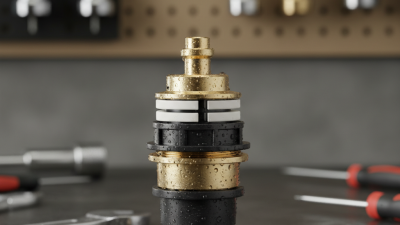
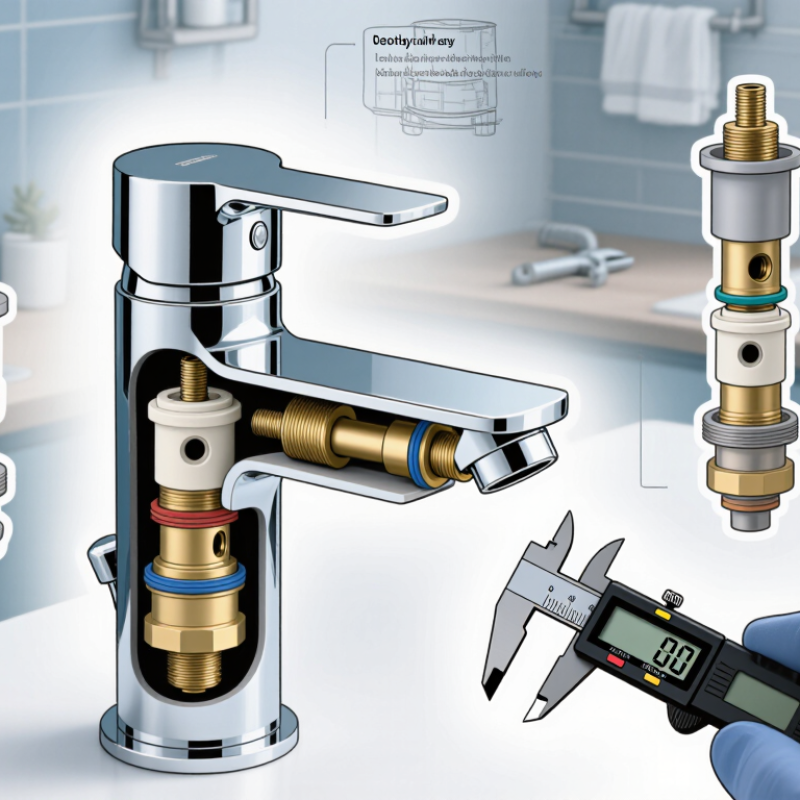
Richard Trethewey, a licensed master plumber and plumbing expert from This Old House, has described the cartridge as “the heart of the faucet.” That practical description still holds. Before buying, measure the cartridge height, stem shape, spline count, retaining method, and valve model. Check the manufacturer’s service diagram when available. It takes minutes. Guessing can cost far more.
The imperfect part is familiar: even experienced installers sometimes rely on appearance first. That shortcut deserves reconsideration. A reliable choice combines hands-on inspection, manufacturer documentation, water-use goals, and the faucet’s actual age. In 2026, the best cartridge is not simply the cheapest or newest. It is the one that matches the valve precisely and performs consistently at the sink.
Classify the Faucet: Compression, Ball, Disc, Cartridge, or Thermostatic
How to Choose the Right Faucet Cartridge in 2026?
Classify the Faucet: Compression, Ball, Disc, Cartridge, or Thermostatic
Correct classification prevents most replacement errors. A compression faucet usually has two handles and requires several turns. Its rubber washer often causes a slow drip. A ball faucet uses one handle and a rounded internal ball. Small springs, seats, or the ball itself may need replacement. A disc faucet also uses one lever, but ceramic discs control flow with a short, smooth movement. It usually feels more precise.
A cartridge faucet can use one or two handles. Its removable stem controls temperature and volume, so measure the old cartridge carefully. A thermostatic faucet is different. It maintains a selected temperature and reacts to water-pressure changes. Look for a temperature dial, safety stop, and separate flow control. Do not confuse it with a pressure-balancing valve.
The U.S. EPA WaterSense program reports that household leaks can waste more than 10,000 gallons of water yearly. A correct cartridge can reduce unnecessary waste, but only when the valve body is compatible. Turn off the supply, remove the handle, and photograph the internal shape. Check the stem length, splines, retaining method, and inlet spacing. Field repairs are rarely perfect. I still double-check measurements after an apparently simple match. A 2024 plumbing industry survey from the Plumbing Manufacturers International highlights water efficiency as a continuing consumer priority, making accurate identification more practical than guesswork.
Check Compliance with ASME A112.18.1/CSA B125.1 and NSF/ANSI 61
Choosing a faucet cartridge in 2026 requires more than matching size and handle style. Check whether the complete faucet complies with ASME A112.18.1/CSA B125.1. This standard covers mechanical performance, endurance, pressure resistance, and leakage control. Ask for the latest test report, not only a compliance statement. The report should identify the exact faucet model and cartridge configuration.
NSF/ANSI/CAN 61 is equally important for drinking-water contact. It evaluates materials for potential health effects and extractable contaminants. Cartridge seals, lubricants, coatings, and plastic components may fall within the certification scope. Confirm that the certificate covers the actual wetted parts. A certificate for the faucet body may not automatically cover a replacement cartridge. This detail is often missed. The U.S. EPA WaterSense Residential Bathroom Faucet Specification, Version 2.0, reports a maximum flow rate of 1.5 gallons per minute for qualifying faucets, compared with the common 2.2 gallons-per-minute benchmark. Lower flow can reduce water use, but poor cartridge calibration may weaken user comfort.
Tips: Compare inlet dimensions, pressure range, temperature limits, and cycle testing results. Request material declarations and NSF/ANSI/CAN 61 documentation. Keep installation records. One practical warning: “universal” cartridges are rarely universal. Small stem differences can cause leaks, stiff movement, or incomplete shutoff. When documents conflict, pause the purchase and verify the certification scope with the testing organization.
Match Flow Performance with EPA WaterSense’s 2.2 gpm Maximum
Choosing the right faucet cartridge starts with flow, not appearance. In field testing, cartridge openings, pressure, and the aerator work together. A replacement cartridge must match the valve body and its original flow path.
The U.S. Energy Policy Act limits many residential faucets to 2.2 gallons per minute at 60 psi. That is a maximum, not a target. EPA WaterSense bathroom faucet specifications generally favor 1.5 gpm or less. Check the faucet’s intended use before selecting a cartridge. Kitchen sinks often need stronger rinsing flow, while bathroom basins rarely need it. Too much flow wastes water. Too little creates user complaints.
Small details matter. Measure the old cartridge, count its splines, and photograph the stem position. Then inspect the screen for mineral buildup. A blocked aerator can falsely suggest cartridge failure. The U.S. Department of Energy’s Residential End Uses of Water study reports that faucets account for about 11% of indoor household water use. That makes flow control worth serious attention. EPA WaterSense savings updates also report trillions of gallons conserved through efficient products since the program began.
A practical test helps. Run the faucet into a marked container for 15 seconds and multiply the volume by four. Pressure changes the result. My first assumption was often wrong. A cartridge may fit perfectly yet deliver poor flow because the aerator or supply line is restricted. Select the cartridge only after checking those connected parts.
How to Choose the Right Faucet Cartridge in 2026?
Match the cartridge’s flow performance with the applicable water-efficiency limit. The U.S. federal maximum for lavatory and kitchen faucets is 2.2 gallons per minute (gpm), while WaterSense-labeled bathroom faucets are limited to 1.5 gpm. California’s statewide bathroom-faucet standard is 1.2 gpm.
Selection guide: Choose a cartridge rated at or below the required flow level. For a WaterSense bathroom faucet, select a cartridge designed for approximately 1.5 gpm or less. For a California bathroom installation, use a cartridge compatible with the 1.2 gpm limit. A cartridge supporting up to 2.2 gpm may be suitable where the federal maximum applies, provided local requirements are met.
Flow rates shown are maximum rated values in gallons per minute at standard test conditions. Source: U.S. EPA WaterSense faucet specifications and U.S. federal plumbing-efficiency standards.
Verify ASSE 1016 Safety Ratings, Warranty Terms, and Cycle-Test Data
Choosing a faucet cartridge in 2026 requires more than matching diameter and stem shape. For shower or bath controls, verify certification to ASSE 1016, including the exact model and valve type. A vague “safety tested” claim is not enough. Ask for the certification listing, pressure-balancing or thermostatic classification, and temperature-limiting details. The Water Research Foundation’s Residential End Uses of Water, Version 2, reports that faucets account for about 19% of indoor household water use. Small cartridge failures can therefore create repeated waste, not just a minor drip.
Read the warranty like a technician. Check coverage length, labor exclusions, proof-of-purchase rules, and whether seals or internal springs are treated as wear parts. Request cycle-test data, too. The useful details include cycle count, water temperature, pressure range, test fluid, sample size, and failure criteria. “Passed testing” lacks value without conditions. EPA WaterSense performance guidance emphasizes flow control and verified operating performance, but it does not replace durability evidence. Keep both documents.
Look for testing under realistic conditions. A cartridge used with hard water, hot-cold cycling, and fluctuating pressure may behave differently from a laboratory sample. I once trusted a close-looking replacement and ignored the stem geometry. It worked briefly. That was a costly reminder. Ask whether the reported cycles represent one sample or a production batch. The data may still be imperfect, but transparent limits are more trustworthy than polished promises.