
Choosing the right Faucet Handle for global sourcing involves more than matching a finish to a product photo. The handle must fit the cartridge, withstand repeated use, and suit the expectations of different markets. A polished chrome lever may look attractive in a showroom, yet fingerprints can quickly make it appear untidy. Small details matter.
Experienced buyers usually begin with technical information. Confirm the mounting dimensions, connection method, material, surface treatment, and compatibility with the faucet body. Request production samples before approving a large order. Test the handle with wet hands, limited grip strength, and repeated turning. A supplier’s catalog can help, but it cannot replace physical inspection. We learned this the hard way.
Global sourcing also requires careful supplier evaluation. Review factory experience, quality-control procedures, packaging standards, and documented test results. Ask how the supplier manages color differences between batches. Check whether replacement parts can be supplied consistently. A low unit price may hide higher costs from returns, damaged finishes, or installation complaints. It is not always the cheapest choice.
Design preferences vary across regions. Some customers prefer a slim lever, while others trust a substantial cross handle. Water exposure, climate, cleaning habits, and local installation practices can influence performance. Reliable decisions combine engineering evidence with market feedback. Keep records of sample approvals and inspection findings. Revisit them when specifications change. Even a well-tested Faucet Handle can fail if communication becomes vague during production. Clear drawings, measurable tolerances, and realistic delivery expectations create stronger sourcing results. There is no perfect shortcut.
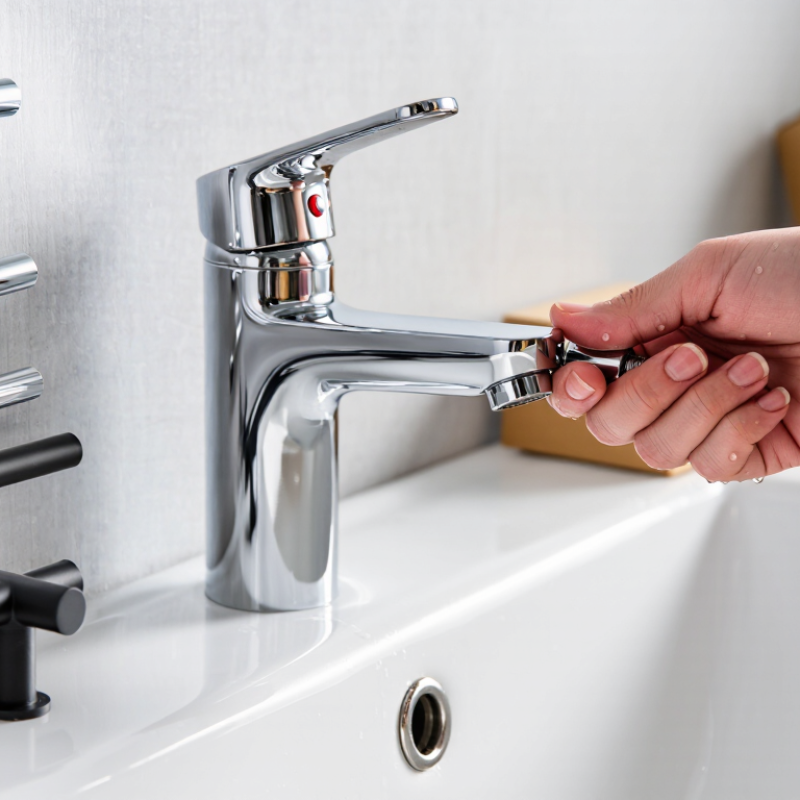
Global sourcing starts with classification, not appearance. ASME A112.18.1/CSA B125.1 covers plumbing supply fittings, including faucet construction, performance, and testing requirements. A single-control handle operates one cartridge and mixes temperature through one lever. Two-handle faucets use separate hot and cold valves. Pressure-balancing and thermostatic valves require closer review because their safety functions may involve additional standards. The handle is visible; the valve does the real work.
EPA WaterSense criteria limit qualifying bathroom faucets to 1.5 gallons per minute, compared with the federal maximum of 2.2 gallons per minute. This difference can reduce water use by about 30 percent, according to the U.S. Environmental Protection Agency. For sourcing, request flow-rate records, cartridge test results, material declarations, and certification scope. A certificate with the wrong model family is not enough. I have seen polished samples fail because the installed valve differed from the tested valve.
Tips: Match handle movement with valve geometry. Check thread size, inlet spacing, operating temperature, and replacement-cartridge access. Confirm whether the target market accepts the same certification pathway. Keep drawings and test reports together. Small errors become expensive at scale. A tidy spreadsheet can still hide an incompatible valve, so physical sampling remains necessary.

For projects using ADA 2010 standards, faucet handles must support one-hand operation. Users should not need tight grasping, pinching, or wrist twisting. A broad lever usually performs better than a small round knob. It should move smoothly with limited force and remain easy to identify by touch.
Check the handle from a seated position. A user may have limited reach, reduced grip strength, or only one usable hand. The lever should offer clear finger space without sharp edges. It should also avoid contacting nearby walls, backsplashes, or soap dispensers. Small clearances matter. A beautiful sample can still be difficult to operate.
Global sourcing teams should request dimensional drawings, force-test records, and finish samples before approval. ADA requirements apply to many United States projects, but other markets may use different accessibility rules. Do not treat one certificate as universal proof. In a practical review, test the faucet with one hand, wet fingers, and light gloves. Our first inspection often focused too much on appearance. That was a mistake. Handle resistance, return speed, and hot-water markings deserved equal attention. Confirm local code requirements with a qualified professional before production.
For global sourcing, set the flow target before choosing the handle design. The U.S. EPA WaterSense Residential Bathroom Faucet Specification limits certified faucets to 1.5 gallons per minute at 60 psi. This is 0.7 gpm below the 2.2 gpm federal maximum. EPA data indicates that this reduction can save household water without sacrificing normal handwashing performance.
Measure more than the catalog number. A compact lever handle should provide steady control near the middle position. Test samples at 20, 45, and 60 psi. Check the first three seconds after opening, when users often feel weak flow. ASME A112.18.1/CSA B125.1 testing can support consistent performance across markets. The WaterSense Product Savings Calculator also shows why small flow reductions matter across large installations. A hotel with 100 rooms can create meaningful savings through repeated daily use.
Some low-flow faucets feel uncomfortable when the aerator is poorly tuned. That lesson is easy to miss. Ask suppliers for flow curves, pressure-compensation details, and replacement aerator specifications. I would not approve a handle from appearance alone. A polished lever may pass a factory test, yet feel loose after repeated cycling. Field trials can expose that weakness before shipment, although they require extra time and imperfect real-world conditions.
Choosing the right faucet handle for global sourcing requires more than a bright showroom sample. Salt spray testing reveals how a finish reacts to a controlled corrosive environment. ASTM B117 and ISO 9227 commonly use neutral salt spray, but their procedures are not completely interchangeable. Chamber settings, specimen preparation, and evaluation methods can differ. Specify the exact standard, test duration, substrate, coating thickness, and acceptance criteria before comparing suppliers.
Tips: Request test panels from the production line, not only polished samples. Inspect exposed edges, screw holes, and handle joints. Record red rust, blistering, staining, and coating loss with dated photographs. A 240-hour result may look strong, but it does not predict every bathroom environment. Hard water, cleaning chemicals, humidity, and fingerprints can change performance. Small details matter.
In supplier reviews, compare identical handle shapes and base materials whenever possible. Different substrates can distort the comparison. Ask whether the report covers one sample or a complete production batch. Also check whether the laboratory follows the latest applicable revision. Longer test hours can sound impressive, yet they may encourage false confidence. ASTM B117 and ISO 9227 are comparative tools, not guarantees of service life. A finish may pass salt spray and still fail near a sharp edge. That uncomfortable gap deserves discussion before purchase orders are approved.
How to Choose the Right Faucet Handle for Global Sourcing
Choosing a faucet handle requires more than comparing catalog photos. Start by reviewing each supplier’s ISO 9001 certification, scope, and current validity. Ask for recent audit evidence and inspection records. Certification supports process control, but it does not guarantee perfect finishing. Check samples for thread accuracy, plating consistency, edge smoothness, and installation fit. Small defects become expensive after thousands of units.
MOQ affects cash flow and product flexibility. A low MOQ may hide higher unit costs, while a high MOQ can create slow-moving inventory. Confirm whether the MOQ applies per model, finish, or total order. Review lead time in writing, including sample approval, production, inspection, and shipping preparation. Suppliers should explain capacity during peak seasons. Vague promises are warning signs. Landed cost needs a wider view. Include unit price, tooling, packaging, freight, insurance, duties, payment fees, and third-party inspection. A cheaper quotation can lose its advantage at the port.
Tips: Build a comparison sheet with identical specifications. Request two samples from different production batches. Test the handle with gloves and wet hands. Ask for a production timeline with milestone dates. Recalculate landed cost when freight rates change. I have found that buyers often trust the first quotation too quickly. That is a mistake. A clear spreadsheet helps, but real samples can still challenge your assumptions.
Supplier evaluation by ISO 9001, MOQ, lead time, and landed cost
The chart converts four measurable sourcing factors into a 0–100 evaluation score. ISO 9001 certification and landed cost receive the highest weighting at 30% each, while MOQ and lead time receive 20% each. Lower MOQ, shorter lead time, and lower landed cost produce higher scores.
| Supplier Profile | ISO 9001 | MOQ | Lead Time | Landed Cost |
|---|---|---|---|---|
| Profile 1 | Certified | 500 units | 18 days | $4.80/unit |
| Profile 2 | Certified | 1,000 units | 25 days | $4.35/unit |
| Profile 3 | Not certified | 3,000 units | 35 days | $3.95/unit |
| Profile 4 | Not certified | 5,000 units | 45 days | $3.60/unit |