Leave Your Message
Choosing a Mixing Valve For Feminine Wash requires more than matching pipe sizes. It requires careful attention to comfort, hygiene, temperature stability, and user safety. The valve controls the balance between hot and cold water. A small adjustment can change a comfortable rinse into an unpleasant surprise.
Gynecologist Dr. Jen Gunter reminds readers, “The vagina is a self-cleaning oven.” Her point matters here. External washing should remain gentle, controlled, and never excessively hot. A suitable valve should provide stable temperature control, smooth adjustment, and reliable anti-scald protection. Thermostatic models are often preferable because they react to sudden pressure changes. That detail becomes important when another tap opens nearby.
Look for drinking-water-safe materials, corrosion resistance, and easy maintenance. Confirm the valve’s working pressure, temperature range, flow rate, and connection size. The product should also suit the wash basin, spray unit, or integrated feminine-care fixture. Local plumbing requirements still matter. Product brochures do not replace professional installation.
Test the outlet before use.
A good installer should measure the actual water temperature, not trust the dial alone. Clean the inlet filters regularly. Replace worn seals before they create unstable flow. No valve is perfect. Even a premium model can perform poorly when the water supply fluctuates or installation is careless. This guide explains how to compare Mixing Valve For Feminine Wash options realistically, including features that look impressive but may offer limited practical value. Comfort is important, but dependable control comes first.
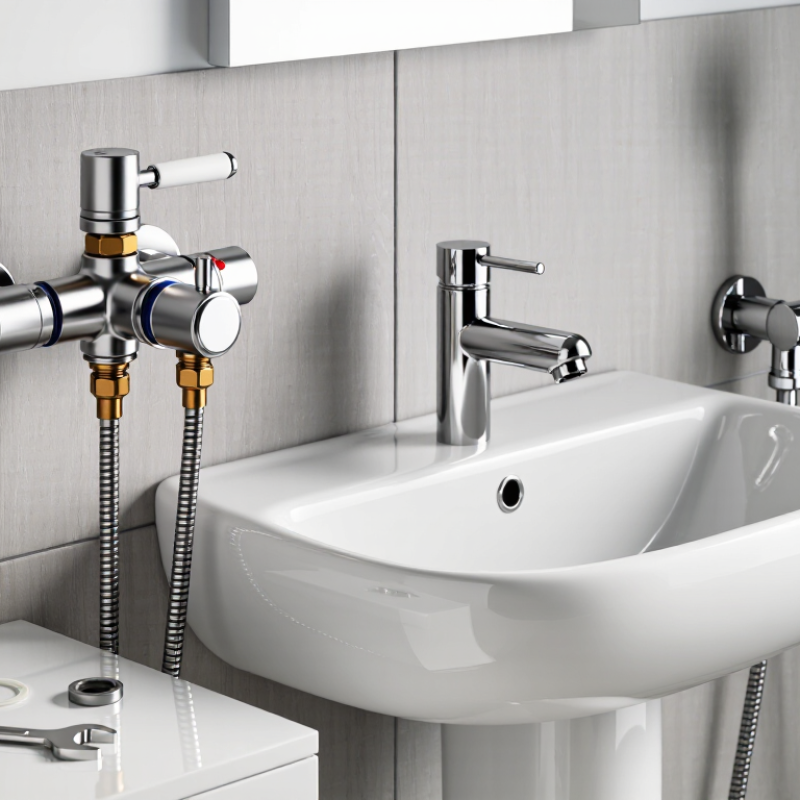
A mixing valve blends hot and cold supply water before it reaches a feminine wash fixture. Its job is more than producing a comfortable stream. It helps limit sudden temperature changes when supply pressure shifts, such as when another tap opens. A stable outlet matters on sensitive skin. Small fluctuations can feel surprisingly sharp.
Temperature control also deserves careful attention. The World Health Organization reports about 180,000 deaths from burns each year worldwide; this figure covers burns broadly, not feminine wash injuries specifically. It is a sobering reminder that hot water is a real safety concern. In the United States, ASSE 1070 covers water-temperature-limiting devices at fixtures. When choosing a valve, check that its rated flow suits the wash fixture and that it responds to pressure changes. Ask a qualified plumber to confirm compatibility and installation. The detail is easy to overlook.
A serviceable valve makes inspection and cleaning simpler. Look for accessible adjustment points and materials suited to continuous contact with water. Follow the fixture maker’s temperature guidance, and verify outlet temperature during commissioning with a thermometer—not just a quick hand test. That test is imperfect. Hands vary, and a brief check may miss changes under different flow conditions.
| Selection Dimension | What to Look For | Why It Matters | Practical Check |
|---|---|---|---|
| Valve type | A thermostatic mixing valve blends hot and cold water to help maintain a selected outlet temperature. A pressure-balancing valve primarily responds to changes in hot- or cold-water pressure. | Temperature control and pressure compensation are different functions. A pressure-balancing valve alone may not maintain a chosen temperature as accurately as a thermostatic valve. | Choose a valve suited to the system’s temperature-control needs, and check whether local plumbing rules require a specific type. |
| Temperature range and limit | Check the manufacturer’s specified adjustment range, maximum outlet temperature, and any adjustable high-temperature limit stop. | A limit stop can help restrict the maximum mixed-water temperature, but it must be set and verified during installation. | Set the outlet temperature according to the fixture instructions and applicable local requirements; verify it with a suitable thermometer. |
| Flow capacity | Compare the valve’s flow rating and required inlet pressure with the wash fixture’s flow demand and the plumbing system’s available supply. | An undersized valve or inadequate supply can reduce flow. A rated flow value is meaningful only when considered at its stated pressure conditions. | Review the valve’s flow-versus-pressure data and the fixture specifications before selecting a size. |
| Inlet conditions | Confirm permitted hot- and cold-water inlet temperatures, pressure range, pressure balance, and minimum temperature difference required by the valve. | Mixing performance depends on the supply conditions. Unbalanced pressure or temperatures outside the specified range can affect outlet stability. | Compare measured or documented supply conditions with the valve’s installation and performance requirements. |
| Materials and water compatibility | Check body, seals, and internal components for compatibility with potable-water use and the water conditions expected at the installation site. | Suitable materials help support reliable operation and compliance with applicable water-contact requirements. | Review product documentation for potable-water approvals or certifications applicable in the installation region. |
| Backflow protection | Determine whether the installation requires check valves, a backflow preventer, or another protective device in addition to the mixing valve. | A mixing valve does not automatically provide every form of backflow protection. Requirements depend on the fixture design and local plumbing rules. | Check the fixture and valve instructions, plumbing drawings, and applicable codes; do not assume the valve includes backflow protection. |
| Installation and access | Confirm connection size and type, installation orientation, service clearances, and access to adjustment and isolation points. | Correct installation supports the valve’s intended operation and makes inspection or servicing easier. | Follow the manufacturer’s installation instructions and provide access for temperature adjustment and maintenance. |
| Maintenance and verification | Look for serviceable strainers, replaceable cartridges, clear maintenance instructions, and available replacement parts. | Scale, debris, or worn components can affect flow and temperature control over time. | Inspect and service the valve at intervals recommended by its manufacturer, and recheck outlet temperature after maintenance. |
| System configuration | Identify whether the valve serves one fixture or multiple outlets, and whether mixing occurs near the fixture or at a central point. | Different layouts have different pipe lengths, demand patterns, and control requirements. A valve selected for one configuration may not suit another. | Base the selection on the complete system design, including the fixture, pipework, supply conditions, and expected simultaneous use. |