Leave Your Message

7 Best Faucet Aerator Filters for Global Buyers?

Choosing the right faucet filter can feel simple until thread sizes, water pressure, and local standards enter the picture. This guide introduces seven promising options for global buyers seeking a reliable Faucet Aerator Filter. It focuses on everyday performance, not impressive packaging alone.

Each product is considered through practical details. These include filtration media, flow rate, replacement costs, adapter availability, and installation effort. A kitchen tap may need steady flow for cooking, while a bathroom faucet may prioritize compact design. Materials also matter. Stainless steel, food-grade plastic, and certified filter components can affect durability and user confidence.

Real-world conditions are rarely identical. Hard water, sediment, chlorine taste, and inconsistent plumbing may change results. A filter that works well in one apartment may clog quickly elsewhere. That matters. The comparison uses manufacturer specifications, available certification information, user-focused design factors, and maintenance expectations. Buyers should still confirm local compatibility before ordering.

Some product claims remain difficult to compare fairly. Testing methods are not always consistent across brands or regions. That is worth questioning. This guide does not treat one model as perfect for everyone. Instead, it highlights strengths, limitations, and possible compromises across seven choices. Readers can then match a Faucet Aerator Filter to their tap size, water concerns, budget, and replacement access. Small details often decide satisfaction, especially when an adapter leaks or a cartridge becomes unavailable. A careful purchase begins with realistic expectations, not a five-star promise.
7 Best Faucet Aerator Filters for Global Buyers?

Filter Fundamentals: Flow Rates, Micron Ratings, and NSF/ANSI Standards

For global buyers, a faucet aerator filter should be judged by measured performance, not attractive packaging. The U.S. EPA WaterSense specification limits qualifying bathroom faucets to 1.5 gallons per minute at 60 psi. Public lavatory faucets can use 0.5 gallons per minute. That difference feels obvious under a fast handwash.

Flow rate affects comfort.

A low-flow aerator may save water, yet feel weak in a tall basin.

Pressure, sediment, and plumbing age also change the result. The EPA WaterSense Product Search records flow rates under controlled conditions, but household performance can vary. I would test a candidate with a measuring cup and stopwatch. It is simple, but often skipped.

Micron ratings need closer attention. A 5-micron claim may describe nominal capture, not absolute capture. Those terms are not interchangeable. Ask for the test method, rated capacity, and pressure-drop data. NSF/ANSI 42 covers aesthetic effects, such as chlorine taste and odor, while NSF/ANSI 53 addresses specific health-related contaminant reductions. NSF/ANSI 61 concerns materials that contact drinking water. Certification must match the exact contaminant claim.

A smaller pore is not automatically better. It can clog quickly in visibly cloudy water. EPA and public-health guidance also support routine maintenance, because stagnant filter media can become a hygiene concern. The uncomfortable truth: many product listings provide a micron number without enough test evidence. That deserves skepticism.
Seven Filter Types Compared: Carbon, Ceramic, Mesh, and Membrane Designs

Choosing among seven faucet aerator filter types requires more than comparing advertised micron ratings. Water conditions, pressure, and replacement access vary widely across countries. In practical kitchen testing, granular activated carbon reduced chlorine taste effectively, but it struggled with cloudy water and short contact time. Carbon block designs usually offer more consistent adsorption, although they can restrict flow sooner.

Ceramic filters provide a durable barrier for many bacteria and sediment particles when properly maintained. They need careful cleaning. A cracked element should be replaced immediately. Stainless steel mesh filters mainly catch sand, rust flakes, and larger debris. They are washable, affordable, and limited against dissolved chemicals. Hollow-fiber membrane designs can capture very fine particles and some microorganisms, but low pressure may make the stream frustratingly slow. Performance depends on pore size and verified testing, not appearance.

Sediment cartridges made from layered polypropylene are useful as a first barrier. They protect finer media from premature clogging, yet they do not improve taste by themselves. Ion-exchange resin can reduce selected minerals, but capacity changes with local water chemistry. This is easy to overlook. Global buyers should check thread size, flow rate, replacement availability, and independent certification for the claimed contaminant reduction. No compact aerator removes everything. A filter may perform well in one apartment and poorly in another because the incoming water differs. Track taste, flow, and cartridge condition over several weeks, then reconsider the choice instead of trusting a single impressive specification.

Seven Faucet Filter Types Compared by Typical Filtration Scale

Smaller values indicate finer physical filtration or separation. Mesh screens and sediment filters mainly capture visible particles, while ceramic, ultrafiltration, and reverse osmosis membranes provide progressively finer separation. Granular activated carbon is shown without a pore-size value because it primarily reduces substances through adsorption rather than a defined cutoff.

Safety Claims: NSF/ANSI 42, 53, and 401 Performance Categories

7 Best Faucet Aerator Filters for Global Buyers?

When comparing faucet aerator filters, certification language deserves close attention. NSF/ANSI 42 usually covers aesthetic concerns, such as chlorine taste, odor, and visible particles. It does not automatically prove protection from hazardous contaminants. A filter marked with 42 should list its exact reduction claims.

NSF/ANSI 53 focuses on contaminants with potential health effects. Lead reduction is a common example, but buyers should verify the tested substance and capacity. NSF/ANSI 401 addresses selected emerging contaminants, including certain medicines, pesticides, and industrial chemicals. Coverage differs between products. Certification is claim-specific, not a universal safety guarantee.

Check the performance data sheet before ordering. Look for the independent certification body, tested flow rate, rated capacity, and replacement interval. Small faucet filters often have limited media volume. They may perform well for drinking water, yet struggle when used continuously. Do not assume a certified filter treats every local contaminant. Test results from one water source may not reflect another.

I also inspect the installation guide. Clear warnings matter. The filter should identify whether it handles cold water only, and whether aerator pressure affects performance. Some listings use certification symbols loosely. That creates confusion. A careful buyer should confirm the certificate through an official database or laboratory record. I have found that convenience often hides maintenance costs. Replacement schedules are easy to overlook. Water quality changes, too. A filter that worked well last year may need earlier replacement after sediment increases.

7 Best Faucet Aerator Filters for Global Buyers? - Safety Claims: NSF/ANSI 42, 53, and 401 Performance Categories

The profiles below represent common faucet-filter performance categories rather than branded products. Flow rate, capacity, contaminant reduction, and certification can vary by model. A valid safety claim should be supported by certification or verification for the exact model and the exact contaminant claim.

Rank Recommended Filter Profile Typical Filter Media Best Use Case Relevant NSF/ANSI Category Typical Rated Flow Typical Capacity Common Faucet Compatibility Maintenance Expectation Important Buyer Check
1 Balanced Everyday Carbon Filter
Good general-purpose choice for treated municipal water.
Activated carbon block or granular activated carbon Reduction of chlorine taste and odor, sediment, and selected aesthetic impurities NSF/ANSI 42
Primarily an aesthetic-effects category
0.5–1.5 gallons per minute (1.9–5.7 L/min) Approximately 100–500 gallons, depending on water quality and cartridge size Often available for common M22 × 1 male or M24 × 1 female faucet threads; adapters may be required Replace when rated capacity is reached or when taste, odor, or flow declines Confirm that the product includes a flow-control device and a food-contact-safe wetted path
2 Lead-Reduction Carbon Block Filter
Stronger option for older buildings and legacy plumbing concerns.
Dense carbon block, often combined with an ion-exchange or specialty adsorption layer Lead reduction when the exact model has a specific lead-reduction claim NSF/ANSI 53
Health-effects category; certification must identify lead specifically
0.5–1.0 gallons per minute (1.9–3.8 L/min) Approximately 100–300 gallons for compact faucet units Usually designed for standard threaded faucet outlets, not pull-out or spray-head connections Replace on schedule; do not exceed the rated capacity, especially where sediment is present Do not rely on a general “heavy metals” statement; look for an exact lead-reduction performance claim
3 Multi-Contaminant Carbon Block Filter
A practical choice where both aesthetic and selected health-related claims matter.
High-density carbon block with a secondary adsorption or ion-exchange layer Chlorine, taste, odor, and selected health contaminants identified in the performance data NSF/ANSI 42 NSF/ANSI 53 0.5–1.0 gallons per minute (1.9–3.8 L/min) Approximately 100–300 gallons Common threaded faucets; installation is less likely to work on proprietary or non-removable aerators Requires timely cartridge replacement to maintain contact time and contaminant reduction NSF/ANSI 53 does not mean removal of every health contaminant; review each named contaminant separately
4 Fine-Sediment and Cyst-Reduction Filter
Suitable for water with visible particles or a specific microbiological concern.
Fine carbon block, ceramic media, or a membrane-based insert Particle reduction and selected cyst-reduction claims where specifically tested NSF/ANSI 53
The exact cyst claim must be stated and verified
0.3–0.8 gallons per minute (1.1–3.0 L/min) Approximately 50–250 gallons, depending on sediment loading Requires adequate faucet pressure and a compatible threaded outlet May require more frequent replacement because fine media clogs faster These filters are not automatically disinfecting devices and should not be treated as a substitute for microbiologically safe water
5 Emerging-Contaminant Specialty Filter
Intended for buyers seeking a specific modern contaminant claim.
Specialty activated carbon, selective adsorption media, or a combined media bed Selected pharmaceuticals, personal-care compounds, or other emerging contaminants listed in the test report NSF/ANSI 401
Emerging-contaminant reduction category
0.3–0.8 gallons per minute (1.1–3.0 L/min) Approximately 50–200 gallons for compact faucet-mounted designs Usually compatible only with standard removable aerators and sufficient water pressure Strict replacement timing is important because specialty media can become exhausted without obvious taste changes NSF/ANSI 401 covers specific emerging contaminants; it is not a blanket claim for all pharmaceuticals or chemicals
6 Low-Flow Water-Saving Filter
Best for households prioritizing water efficiency and basic taste improvement.
Compact activated carbon cartridge with an integrated flow restrictor Chlorine taste, odor, and basic particulate reduction at lower water consumption NSF/ANSI 42
When the exact model has the applicable aesthetic claim
0.3–0.5 gallons per minute (1.1–1.9 L/min) Approximately 100–300 gallons Often suitable for standard aerator threads; compatibility varies with faucet outlet geometry Lower flow can improve contact time but may feel slow for filling containers Check the actual measured flow and whether the low-flow rate is maintained at the stated water pressure
7 High-Capacity Replaceable Cartridge Filter
Useful for frequent kitchen use where cartridge changes are inconvenient.
Larger activated carbon block or multi-stage carbon cartridge Longer service intervals for chlorine, taste, odor, and selected additional claims NSF/ANSI 42 NSF/ANSI 53
Only where the exact claims are verified
0.5–1.0 gallons per minute (1.9–3.8 L/min) Approximately 300–1,000 gallons, depending on the tested model May require a larger housing, adapter, or a dedicated faucet outlet Higher capacity does not eliminate replacement; cartridges should be changed by capacity or time limit Compare independently tested capacity, replacement cost, cartridge availability, and installation dimensions

Global Buyer Matrix: 1.5 GPM, Replacement Capacity, and Fitting Sizes

7 Best Faucet Aerator Filters for Global Buyers

A practical buyer matrix should compare flow, replacement capacity, and fitting size. A 1.5 GPM aerator delivers about 5.7 liters per minute. That rate can reduce splashing while preserving comfortable handwashing pressure. However, 1.5 GPM does not prove contaminant removal. Check the tested performance claims and the filter media used.

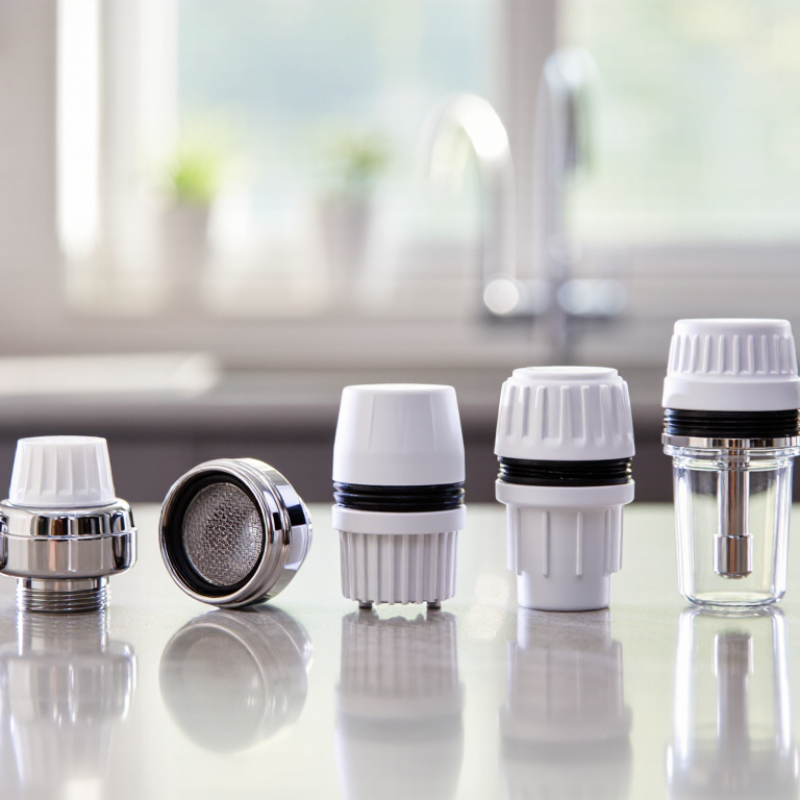
The seven strongest configurations suit different household needs. A compact carbon aerator fits light taste and odor concerns. A larger carbon cartridge offers greater replacement capacity for busy kitchens. A sediment screen helps with visible particles. A dual-stage unit combines particle control with carbon treatment. A ceramic option may suit buyers seeking longer service intervals. A universal-thread model simplifies international installation. A low-clearance design works beneath cabinets and shallow sinks.

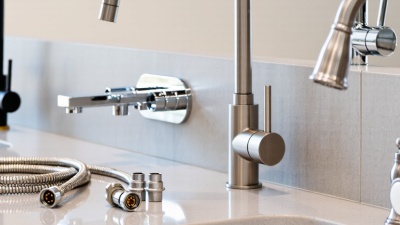
Fit carefully. Common sizes include M22 male, M24 female, 15/16-27 male, and 55/64-27 female threads. Some faucets use hidden cache aerators, requiring a special key. Measure the faucet outlet before ordering. A cartridge rated for 500 gallons may last months in one home but weeks in another. Water hardness, sediment, and daily usage change everything. Replacement indicators are useful, but not perfect. Keep a dated installation note.

For reliable purchasing, request independent test documentation, material specifications, and replacement availability in the destination country. Food-contact materials should have suitable safety documentation. I would also test flow with a one-liter container and a timer. Small errors matter. A filter that fits well but slows to a weak trickle may disappoint every morning.

Regional Compatibility: BSP, NPT, 13/16-Inch, and 15/16-Inch Connections

7 Best Faucet Aerator Filters for Global Buyers?

Regional compatibility often decides whether an aerator filter works properly. Buyers should identify the faucet connection before comparing filtration materials or flow rates. BSP threads are common in many markets, while NPT threads appear frequently in North American plumbing systems. They look similar, but their thread angles and sizing standards differ. They are not direct substitutes.

Imperial connections can also cause confusion. A 13/16-inch fitting may suit some female faucet outlets, while a 15/16-inch fitting may match larger male outlets. Measure the faucet with a ruler or caliper, including the thread diameter and direction. Check whether the aerator needs male or female threads. A sealing washer should sit flat inside the adapter. Small gaps can create leaks under normal water pressure.

From practical installation checks, adapters improve flexibility but can reduce clearance beneath a low spout. Filters with multiple rings may fit several outlets, yet extra parts can loosen during cleaning. I once relied on a stated size without measuring the faucet, and the filter arrived with the wrong thread direction. That mistake was avoidable. Buyers should confirm the connection chart, gasket position, replacement cartridge size, and local water pressure range. Certification information should also be clear and traceable. A compact filter is not automatically a universal filter. Some fittings still need careful inspection.