Leave Your Message
Choosing the right Fxing Set For Faucet is rarely a simple purchasing decision. Global buyers must match the set with cartridge design, valve dimensions, thread standards, water pressure, and installation conditions. A small mismatch can cause dripping, cross-threading, or a loose handle within weeks.
Industry data shows why this category deserves closer attention. Grand View Research identifies plumbing fixtures as a steadily expanding global market, supported by residential construction, renovation, and water-efficiency upgrades. Fortune Business Insights also reports continued growth in the broader plumbing fixtures sector, although market estimates vary by product definition and region. That difference matters. A repair kit suitable for a European ceramic cartridge may not fit a North American compression valve.
Professional standards provide another practical reference. ASME A112.18.1/CSA B125.1 covers plumbing supply fittings in North American markets, while EN 817 addresses mechanically adjustable single-control mixing valves in Europe. These standards do not replace product verification. They help buyers ask better questions about materials, performance, and compatibility.
This guide examines ten common faucet fixing set types, including ceramic cartridge kits, O-ring sets, washer kits, pull-out hose repairs, and handle replacement packs. Each type solves a different failure pattern. Some are inexpensive. Some require careful measurements.
Small parts matter.
In my experience, the most costly mistake is buying from appearance alone. Thread pitch, stem profile, seal material, and brand-specific geometry often decide whether a repair succeeds. Buyers should compare technical drawings, batch quality, certification claims, and after-sales support before placing large orders. No single ranking fits every market, but a structured comparison can reduce returns and installation delays.
Top 10 Types of Faucet Fixing Sets for Global Buyers
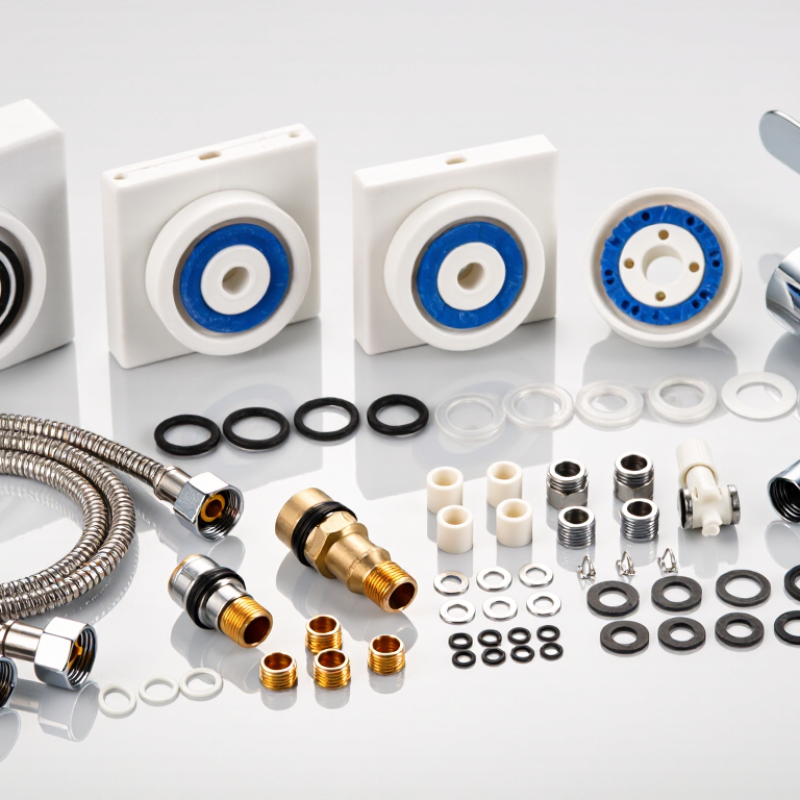
Faucet fixing sets secure taps to sinks, counters, or wall fittings. They also reduce movement, vibration, and slow leaks around connection points. Common sets include locknut, U-bracket, horseshoe washer, rubber washer, metal washer, threaded rod, nut, spacer, adapter, and extension types. Each component solves a different installation problem. Rubber washers seal uneven surfaces, while metal washers distribute pressure beneath the basin. Threaded rods help installers reach recessed mounting holes. Wall-mounted faucets often need longer adapters and stronger fixing plates.
The right set depends on faucet design, mounting thickness, water pressure, and installation access. Stainless steel parts suit humid kitchens and commercial washrooms. Zinc-coated steel can be practical, but coating damage may invite corrosion. Plastic parts are lighter and resist some chemicals, yet they may crack under excessive tightening. The United States Environmental Protection Agency reports that household leaks can waste nearly 1 trillion gallons of water annually. A small fixing error can become an expensive maintenance issue. The WHO and UNICEF Joint Monitoring Programme reported that 2.2 billion people lacked safely managed drinking water in 2022, making reliable water hardware especially important in many regions.
Tips: Check thread size before ordering. Measure the basin thickness. Match the washer shape carefully. Do not overtighten plastic nuts. A complete-looking set may still miss a spacer. I have seen this mistake delay installation. Buyers should request material certificates, thread specifications, corrosion tests, and clear application photos. Local plumbers can also confirm whether the set fits concealed, deck-mounted, or wall-mounted faucets.
| No. | Faucet Fixing Set Type | Primary Purpose | Typical Components | Common Faucet Applications | Common Materials | Key Buying Considerations |
|---|---|---|---|---|---|---|
| 1 | Single-Hole Basin Fixing Set | Secures a single-hole mixer or tap to a basin or countertop. | Threaded fixing rod, horseshoe plate, rubber washer, metal washer, fixing nut and spacer. | Single-lever basin mixers and monobloc bathroom taps. | Brass, stainless steel, zinc-plated steel, EPDM or silicone rubber. | Thread size, rod length, countertop thickness and access below the basin. |
| 2 | Two-Hole Basin Tap Fixing Set | Provides separate fixing points for hot and cold basin taps. | Two fixing nuts, washers, rubber seals, threaded tails or fixing studs. | Traditional two-handle basin taps and deck-mounted pillar taps. | Brass, stainless steel, plated steel, rubber or fiber sealing materials. | Hole spacing, tail diameter, nut shape and compatibility with the tap body. |
| 3 | Kitchen Sink Mixer Fixing Set | Stabilizes a taller mixer on a stainless-steel or composite kitchen sink. | Long threaded stud, support plate, rubber gasket, metal washer and large fixing nut. | Single-lever kitchen mixers, pull-out mixers and high-arc sink taps. | Stainless steel, brass, reinforced polymer, EPDM and nylon. | Longer thread length, reinforced support for thin sinks and resistance to vibration. |
| 4 | Wall-Mounted Faucet Fixing Set | Anchors a faucet or wall plate to concealed pipework and a finished wall surface. | Wall flanges, mounting screws, anchors, threaded adapters, escutcheons and sealing washers. | Wall-mounted basin taps, bath fillers, shower mixers and utility faucets. | Brass, stainless steel, plated metal, nylon anchors and elastomer seals. | Pipe-center spacing, wall substrate, connection standard and available adjustment. |
| 5 | Freestanding Bath Filler Fixing Set | Secures a floor-mounted bath filler and connects it to concealed floor plumbing. | Floor mounting plate, anchor bolts, threaded connectors, washers, nuts and cover plates. | Freestanding bath fillers installed beside freestanding tubs. | Brass, stainless steel, carbon steel anchors and rubber or fiber seals. | Floor strength, anchor type, vertical alignment and hot/cold inlet position. |
| 6 | Shower Mixer Mounting Set | Fixes a concealed or exposed shower mixer and maintains secure pipe connections. | Wall brackets, compression or threaded connectors, fixing screws, wall plugs and cover plates. | Exposed thermostatic mixers, manual shower mixers and bath-shower combinations. | Brass, stainless steel, plated steel, polymer anchors and sealing washers. | Inlet spacing, connection thread, wall construction and service access. |
| 7 | Bidet and Hygienic Spray Fixing Set | Mounts compact bidet taps or spray holders securely on sanitaryware or a wall. | Small fixing studs, washers, nuts, mounting brackets, seals and hose support hardware. | Bidet mixers, handheld bidet sprays and toilet-side hygiene sprayers. | Brass, stainless steel, plated steel, nylon and EPDM. | Compact dimensions, corrosion resistance, ceramic access and hose clearance. |
| 8 | Utility and Laundry Faucet Fixing Set | Provides durable mounting for faucets used in service areas and washrooms. | Heavy-duty washers, fixing nuts, threaded tails, wall brackets, screws and pipe seals. | Laundry sinks, janitorial sinks, garage sinks and outdoor utility points. | Brass, stainless steel, galvanized or plated steel and durable rubber. | Load capacity, exposure to chemicals, pipe connection type and installation environment. |
| 9 | Replacement Washer and Nut Set | Renews worn sealing and clamping parts during faucet repair or maintenance. | Rubber washers, fiber washers, metal washers, locknuts, retaining nuts and O-rings. | Repair of basin, kitchen, bath, bidet and utility faucets. | EPDM, silicone, NBR, fiber, stainless steel, brass and plated steel. | Seal profile, internal diameter, temperature range, water compatibility and thread match. |
| 10 | Quick-Access Faucet Repair and Fixing Set | Supports faster installation and service where access below the fixture is restricted. | Top-fixing nut, captive washer, alignment sleeve, extension tool and replacement seals. | Basin and kitchen mixers installed in narrow cabinets or confined spaces. | Brass, stainless steel, reinforced polymer, nylon and elastomer seals. | Top-access operation, tool clearance, fixing range and compatibility with the faucet base. |
Note: Before purchasing, verify the faucet mounting-hole diameter, thread specification, fixing-rod length, connection spacing, substrate type and seal material required for the installation.