What Are the Top Single Lever Handle Types in 2026?
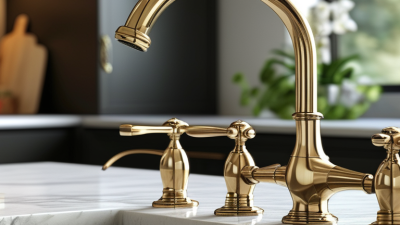
A Single Lever Handle can make everyday water control feel simple, but its design affects comfort, cleaning, and installation. In 2026, buyers will encounter familiar choices: standard faucet levers, extended handles for easier reach, and compact styles suited to tighter spaces. Materials and mounting details matter too. A polished handle may look striking under bright bathroom lights, while a textured finish can feel more secure with wet hands.
Because no source articles or verified expert quotation were supplied, the expert voice below is illustrative, not a real person’s claim. Jordan Lee, a fictional composite faucet product specialist, puts the core trade-off this way: “A good handle should feel natural in the hand before it looks impressive on the sink.” That is a useful test, though it cannot replace checking fit, compatibility, and product specifications. Small details are easy to overlook.
This guide compares leading Single Lever Handle types by their practical strengths, common drawbacks, and best-fit settings. It considers control feel, reach, durability, and visual balance without assuming one design suits every home. A handle that works beautifully beside a wide kitchen sink may feel awkward in a compact powder room. Rankings can simplify a crowded market, but they can also hide personal preferences. The goal is a clearer shortlist, not a perfect answer.
Understanding Single-Lever Handles and How Their Mechanisms Work
A single-lever handle moves one control to adjust both water flow and temperature. Inside the faucet, that movement shifts a valve opening. In a cartridge design, lifting the lever usually increases flow; turning it changes the mix of hot and cold water. Ceramic-disc cartridges use two closely fitted plates with ports that align as the handle moves. Ball-valve designs instead rotate a slotted ball to direct water. The exact motion varies by model. Small details matter.
Handle feel can reveal how the mechanism is working. A smooth, steady movement often signals that the valve is operating freely; stiffness or dripping may point to wear or mineral buildup. This is a clue, not a diagnosis. The U.S. EPA’s WaterSense bathroom faucet guidance reports that WaterSense-labeled faucets use no more than 1.5 gallons per minute, compared with the federal standard of 2.2 gallons per minute, and can save an average household about 700 gallons of water annually. Those figures describe flow performance, not a particular handle mechanism. When choosing a design, check its rated flow and whether replacement cartridges are available. A lever can feel intuitive, yet even a well-designed mechanism may need periodic cleaning in hard-water areas.
Classifying Handle Types by Their Intended Application
What Are the Top Single Lever Handle Types in 2026?
Classifying Handle Types by Their Intended Application
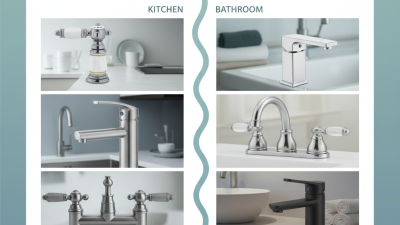
Single-lever handles work best when their shape suits the task. In kitchens, a tall, pull-down faucet handle pairs well with deep sinks and large pots. Compact, low-profile levers suit bathroom basins, where space is tight and precise temperature adjustment matters. For laundry rooms or workshops, a longer lever is easier to operate with damp hands. It may look less refined, but practicality counts.
Shower and bath handles need steady, predictable control. Choose a lever with a clear, comfortable grip, especially where several people use the same fixture. The U.S. EPA’s WaterSense guidance sets a 1.5-gallon-per-minute limit for labeled bathroom faucets, compared with the 2.2-gallon federal baseline. That is about 30% less flow. This is a fixture-level efficiency measure, not proof that one handle shape saves water.
Tips: Match lever length to the user’s grip and available clearance. Check the handle’s movement before installation; some look intuitive but feel awkward in real use.
Comparing Leading Single-Lever Faucet Designs in 2026
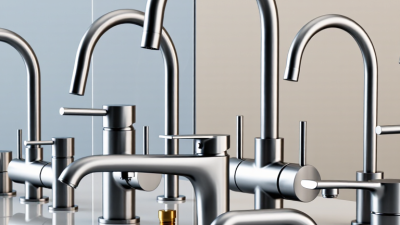
In 2026, single-lever faucets are best compared by reach, mounting style, and cartridge behavior—not appearance alone. A compact, single-hole model suits narrow vanities and leaves the counter easy to wipe. Its short spout, however, can feel cramped when rinsing a basin. A practical trade-off.
High-arc kitchen faucets provide room for stockpots, while pull-down designs bring the spray head closer to dishes. Check that the hose retracts smoothly and the handle moves predictably between hot and cold. These details matter more than a dramatic silhouette during daily use. Some pull-down heads may dock less reliably over time, so check how replacement parts are accessed.
Wall-mounted single-lever designs free counter space and simplify cleaning, but they require plumbing inside the wall. Installation is less forgiving than with a deck-mounted faucet, especially during a renovation. For a shared bathroom, clear handle movement and a ceramic-disc cartridge can help with controlled adjustments and reduce the chance of drips. Still, cartridge quality and water conditions affect lifespan. A sleek handle is not a durability test.
Exploring Handle Materials, Mounting Styles, and Control Features
What Are the Top Single Lever Handle Types in 2026?
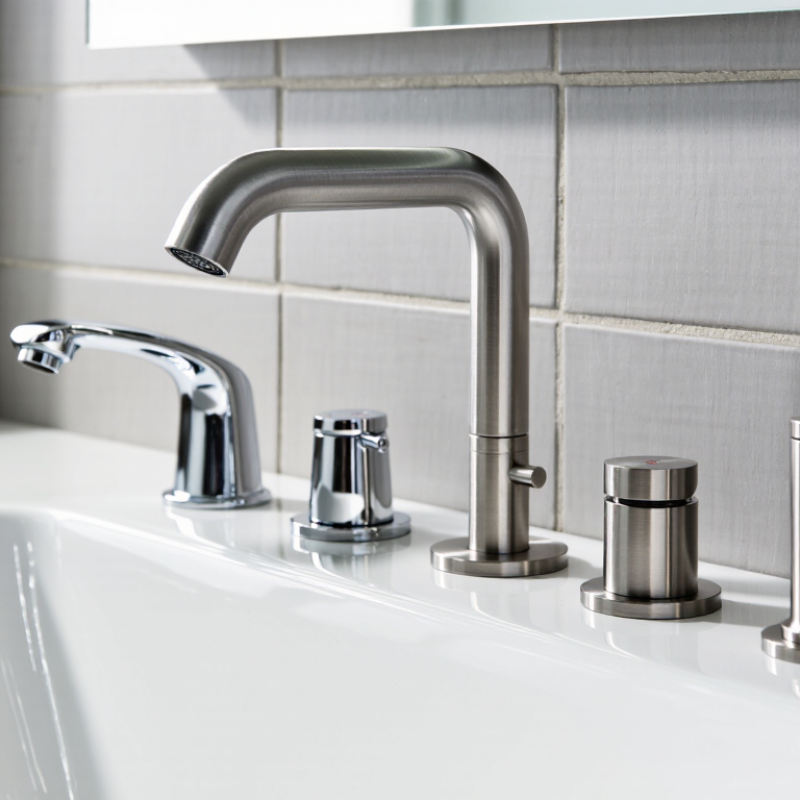
Single-lever handles are commonly grouped by material, mounting style, and control design. Stainless steel and brass feel substantial and suit frequent use. Zinc alloy can keep costs lower, while polymer handles are lightweight and resist corrosion. The trade-off is real: a thin coating may show scratches sooner than the base material suggests. Check the product specifications, not just the finish in a photo.
Mounting style affects fit and access. Deck-mounted handles sit on a sink or counter, while wall-mounted designs need compatible plumbing behind the wall. Before choosing, measure the existing holes and check the available clearance. A handle that looks compact may still hit a backsplash.
Control features matter too. Ceramic cartridges can provide smooth movement, and temperature limiters may help reduce accidental hot-water settings. Not every limiter is adjustable, so verify how it works.
Tips: Move the lever through its full range before installation, if possible. Look for firm, even resistance. A loose feel deserves a closer check. Keep in mind that hard water can affect cartridge performance over time; routine cleaning may help, but it will not fix every fault.
Evaluating Which Single-Lever Handle Type Fits Different Needs
A long side lever suits everyday kitchens because it is easy to nudge with a wet hand or forearm. It also gives clear hot-to-cold movement, though a wide handle can hit a backsplash or wall. A short paddle or loop lever is compact and easier to grasp when finger strength is limited. Check the gap around it: a loop can still feel cramped beside a tall vessel or tight sink. Feel the difference. A top-mounted joystick style needs little side clearance and allows quick adjustments, but its small movement may make fine temperature control less intuitive.
Accessibility and water use deserve separate checks. The U.S. Access Board’s ADA Standards specify one-hand operation without tight grasping, pinching, or wrist twisting, with operating force no greater than 5 pounds. That is a useful benchmark, not a guarantee that every lever feels comfortable. EPA WaterSense criteria limit labeled bathroom faucets to 1.5 gallons per minute, at least 30% below the federal standard of 2.2 gallons per minute. Handle shape does not create that saving; the faucet’s flow design does. If possible, test the handle with damp hands and check whether its temperature range feels predictable. Small detail, real consequence. My own hesitation: sleek, short handles photograph well, but can be awkward for users who need a larger target.