Leave Your Message

Top 10 Handheld Shower Heads to Buy in 2026

Choosing a handheld shower head is about more than spray settings. Hose reach, grip, mounting angle, and easy-to-clean nozzles matter when rinsing shampoo or bathing a child. A Handshower can also make cleaning a tiled shower less awkward. Small details become obvious with wet hands.

Water efficiency deserves a closer look. The U.S. Environmental Protection Agency’s WaterSense program says showers account for nearly 17 percent of residential indoor water use. WaterSense-labeled showerheads use no more than 2.0 gallons per minute, compared with the federal standard of 2.5 gallons per minute, while meeting spray-performance requirements. These figures offer useful context, but they do not guarantee that every low-flow model will feel satisfying. Fit matters.

This 2026 guide compares ten handheld models through practical criteria: flow rate, spray options, hose length, installation needs, materials, and warranty terms. It distinguishes published manufacturer specifications from independent certification, so shoppers can check what each claim actually means. Where a product’s durability is difficult to judge from specifications alone, that uncertainty should be acknowledged—not polished away. A low price can look appealing. A stiff hose or slippery handle may tell a different story after a few weeks. Trade-offs remain. The right choice depends on water pressure, bathroom layout, and daily routines, not on the longest feature list.
Top 10 Handheld Shower Heads to Buy in 2026

Handheld Shower Head Basics: Hose, Spray Face, Diverter, and Mount

A handheld shower head is more than a spray face attached to a hose. The hose determines how easily the head reaches a seated bather, a child, or a shower corner. Measure the space before choosing a length; an extra-long hose can feel awkward in a compact stall. Check that its connections match the existing fitting, and look for smooth bends that resist kinking.

The spray face shapes daily comfort. Wider nozzles can cover more of the body, while concentrated streams may help rinse shampoo from thick hair. Mineral deposits can clog small openings, so flexible, easy-to-clean nozzles are practical. Not every advertised spray setting feels distinct in use. Water pressure and plumbing affect the result.

The diverter sends water between the handheld head and another shower outlet. Test its movement if possible; a stiff control can be frustrating with wet hands. The mount matters, too. A secure adjustable bracket should hold the head without slipping, and its height should suit the people using the shower. Small details matter. A mount that looks sturdy may still wobble, so check how firmly it grips the wall or rail before relying on it.
Flow-Rate Benchmarks: EPA WaterSense 2.0 GPM vs. the 2.5 GPM Federal Limit

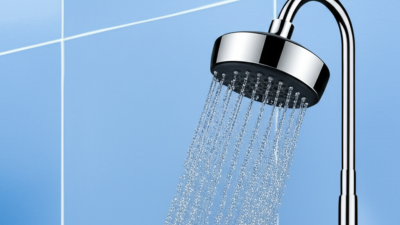
For a 2026 handheld showerhead, flow rate is more than a specification on a box. The U.S. Department of Energy sets a federal maximum of 2.5 gallons per minute for showerheads. EPA WaterSense-qualified models are limited to 2.0 gallons per minute and must meet spray-performance criteria.

That difference is 20 percent: a five-minute shower uses about 10 gallons at 2.0 GPM, versus 12.5 gallons at 2.5 GPM. Small arithmetic, visible on the water meter.

EPA estimates that an average family can save 2,700 gallons of water and 330 kilowatt-hours of electricity annually by replacing standard showerheads with WaterSense-labeled models. The savings depend on household habits, hot-water use, and local conditions.

Flow rate alone cannot predict comfort. A focused spray can feel stronger than a wide, diffuse pattern, while low household pressure may make either disappointing. A real trade-off.

When comparing handheld models, check whether the stated rate applies at standard test pressure and whether the package identifies WaterSense qualification. Also consider hose length, trigger access, and how securely the head docks; these details matter during rinsing and cleaning. The benchmark helps narrow choices, but it is not a promise of identical pressure in every bathroom. That part is easy to overlook.

How to Compare 2026 Top 10 Picks: Spray Modes, Hose Reach, Pressure, and Warranty

A useful 2026 comparison starts with what each spray mode actually does, not how many buttons the handle has. A focused rinse can help wash shampoo from thick hair, while a gentler setting may suit sensitive skin. More modes are not automatically better. The U.S. EPA’s WaterSense showerhead specification sets a maximum flow rate of 2.0 gallons per minute, compared with the federal standard of 2.5 gpm. The EPA also estimates that replacing an older showerhead with a WaterSense-labeled model can save an average family 2,700 gallons of water each year. (EPA, WaterSense Showerheads)

Hose reach matters during real tasks. Check the listed length, then consider whether it reaches the tub floor, a seated bather, or the far edge of the shower. A hose that kinks near the handle can make a generous measurement less useful. Small detail. For pressure, compare performance at similar flow rates and note your home’s water pressure; a high mode count cannot compensate for weak plumbing. The EPA’s specification evaluates spray force and coverage as well as water use, a useful reminder that flow rate alone does not describe comfort.

Warranty terms deserve a line in the comparison table. Record coverage length, exclusions for finish or hose wear, and whether proof of purchase is required. A longer warranty sounds reassuring, but its fine print may matter more. I would avoid ranking a pick on headline claims alone; without consistent testing in the same setup, the comparison has limits. That is not perfect, but it is more honest.

Top 10 Handheld Shower Heads to Buy in 2026 — How to Compare 2026 Top 10 Picks: Spray Modes, Hose Reach, Pressure, and Warranty

A brand-free comparison of common handheld shower-head configurations. These are shopping profiles, not claims about specific models; confirm each product’s specifications, included hose, and warranty before purchase.

Pick Best For Spray Modes Hose Reach Pressure Considerations Warranty Check
1. Simple multi-spray hand shower Everyday use and straightforward controls Usually several selectable patterns; verify the count and names on the product listing Check the included hose length; roughly 60 in is a common listing specification Spray feel depends on household pressure, flow rate, and nozzle design Terms vary; check coverage period, exclusions, and proof-of-purchase requirements
2. High-flow hand shower Buyers prioritizing a fuller-feeling spray Often includes a broad spray and one or more focused patterns Confirm whether the hose is included and measure the required reach Check the rated flow at the stated test pressure; U.S. federal rules generally limit showerheads to 2.5 gpm at 80 psi Compare written warranty terms; high flow is not itself a warranty feature
3. Water-efficient hand shower Reducing water use while keeping a handheld format Mode selection varies; prioritize a comfortable pattern over mode count Hose length is model-specific; check reach to seated or standing users Look for the labeled flow rate. WaterSense-labeled showerheads are independently certified to use no more than 2.0 gpm Check whether the warranty covers the showerhead, hose, and finish
4. Long-hose hand shower Accessible bathing, rinsing, and cleaning the shower Usually a practical mix of general and targeted spray patterns Choose by measured reach; longer hoses are available, but are not included with every unit A longer hose does not increase water pressure; performance depends on the plumbing and head design Confirm whether the hose has separate coverage from the showerhead
5. Pause-control hand shower Users who want a temporary low-flow or pause control Several patterns may be offered; check how the pause control operates Verify the supplied hose length and connection type A pause control may reduce flow temporarily; it does not raise household pressure Review any exclusions related to moving parts or control mechanisms
6. Ergonomic-grip hand shower Comfortable handling and easier reach during bathing Mode count varies; test whether the selector is easy to operate Match hose reach to the user and bathroom layout Grip shape affects handling, not water pressure; check the published flow specification Check coverage for the unit and its surface finish
7. Lightweight hand shower Reduced hand fatigue and frequent handheld use Often offers a few core patterns; exact options vary by model Confirm hose length and whether the hose weight affects ease of use Light weight does not indicate stronger spray; compare rated flow and user reviews carefully Check the warranty duration and the process for replacement parts
8. Hand shower with adjustable holder Households with users of different heights Typically offers selectable patterns; confirm the selector is accessible while mounted Check both hose reach and the holder’s adjustment range The holder changes positioning, not pressure; home pressure and flow remain key factors Confirm whether the mount and holder are included and covered
9. Easy-clean nozzle hand shower Simple upkeep in areas with mineral deposits Mode options vary; look for a pattern that suits daily use Check the included hose length against the intended cleaning reach Mineral buildup can affect spray performance; follow the manufacturer’s cleaning instructions Review exclusions for scale, maintenance, and cosmetic wear
10. Hand shower with matching fixed-head setup Flexible use with a separate overhead shower option Compare the handheld and fixed-head patterns separately Check the handheld hose length and the diverter or connector requirements A two-head setup may have different flow behavior depending on how it is configured; check the stated flow for each mode Confirm whether components have separate warranty terms and are sold as a complete set

Comparison note: Hose length, spray modes, flow rate, compatibility, and warranty are model-specific. Pressure at the shower also depends on the home’s plumbing and water supply; a showerhead cannot reliably compensate for low household pressure.

Build and Safety Standards: ASME A112.18.1/CSA B125.1 Compliance

For a handheld shower head, ASME A112.18.1/CSA B125.1 compliance is more than a reassuring label. The standard sets performance and construction requirements for plumbing supply fittings, including relevant shower components. It gives buyers a consistent basis for checking whether a product has been evaluated against defined criteria. Look for documentation naming the exact model, not only a product family. A certification mark and a clear installation guide make verification easier. Check the details.

Inspect the hose connections, handheld cradle, and diverter for secure, solid construction. Confirm that the documentation covers the configuration being sold, since included parts can vary. Compliance does not promise flawless operation or guarantee that a product suits every home. Water pressure, installation, and local requirements can affect the result. I would not rely on polished packaging alone; paperwork can be easy to overlook. A careful comparison of the model number, certification information, and instructions is a practical step before buying.

Installation and Care: Thread Fit, Leak Checks, and Mineral-Scale Removal

Before choosing a handheld shower head, check that its connector matches your shower arm’s thread size. Also inspect the rubber washer; it should sit flat inside the coupling. Most connections seal with this washer, so thread tape is not always needed. Hand-tighten the coupling, then use a cloth-covered wrench only if the instructions allow it. Snug is enough. Overtightening can crack plastic parts or distort the washer.

After installation, dry the connection with a towel and run the shower for about 30 seconds. Check the joint while water is flowing, then check again after turning it off. A faint drip can be frustrating; sometimes the washer, not the threads, is the culprit. Loosen the coupling and reseat the washer before adding more force. Even careful installations may need a small adjustment.

In hard-water areas, mineral scale can narrow spray openings and weaken the flow. Detach the shower head if the instructions permit, then soak the removable spray face in diluted white vinegar. Rinse it well and gently clear softened deposits with a soft brush. Avoid sharp needles, abrasive pads, and strong cleaners, which can damage the finish or nozzles. Some finishes need gentler care, so check the care instructions before soaking.

Top 10 Handheld Shower Heads to Buy in 2026

Installation and Care: Thread Fit, Leak Checks, and Mineral-Scale Removal

Water hardness provides a useful guide to mineral-scale risk. The chart shows the upper boundary of each USGS category; water above 180 mg/L is classified as very hard. These categories do not prescribe a cleaning schedule—inspect for scale and follow the shower head’s care instructions. Before installation, confirm compatible thread sizes and a correctly seated washer; check connections for leaks after turning on the water. Remove mineral deposits only with cleaning methods approved for the product.